A couple of weeks ago, Julie Forrest, leading literary blogger, digital maven at Random House, and all-around nice person, passed along a series of 20 questions on behalf of BookLounge, and asked for my responses. I was happy to oblige. If insomnia plagues you, please feel free to check out my not always thoughtful answers. (You can just click on the graphic below to get to the site.)
Archive for the ‘How I write’ Category
20 Writerly Questions with BookLounge
Wednesday, August 25th, 2010Evadne Macedo posts a Q&A with me
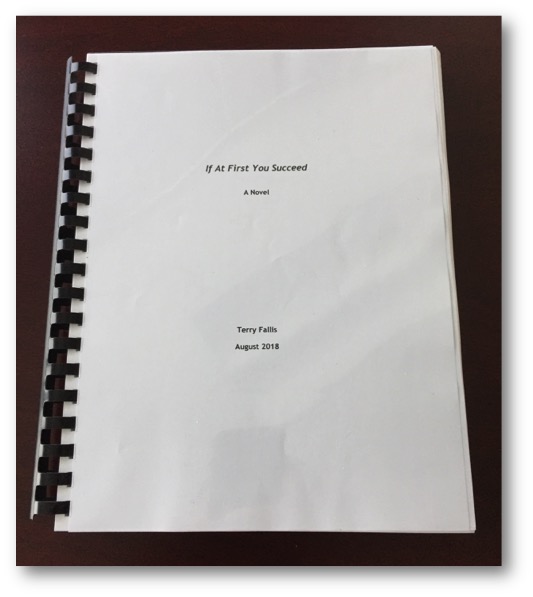
Wednesday, January 20th, 2010Last year, I did a reading at a public library in Toronto’s Beach community. When it was over, a young woman approached to have her book signed and to ask some writing-related questions. Our conversation carried on out onto the street after the event, and I got to know Evadne Macedo, aspiring novelist and all-round lovely person. Evadne is a lawyer, and works by day at the Ontario Human Rights Commission. But she’s also a writer. I read sections of an early draft of her first novel shortly after we met, and saw real promise in those pages. I loved the voice, matter-a-fact tone, and the quirky sense of humour. Well, in the intervening months, Evadne has been hard at work on her manuscript, while starting other writing projects as well, including a second novel, and a writing blog. I’m just now returning to her first novel manuscript, The 29th Day, now that she’s happier with it (or as happy as writers can ever truly be with the state of their manuscript!). I’m looking forward to reading it and offering whatever help I can as she ventures into the publishing waters.
In the meantime, check out her writing blog where she’s posted some interesting interviews with other writers. Evadne is very good at asking thoughtful, meaty, questions. I fear I may be less accomplished at the answering part.
Manuscript has been submitted…
Sunday, November 1st, 2009
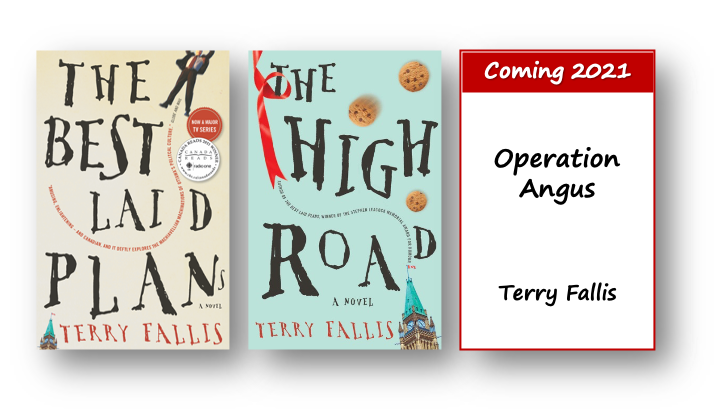
Last weekend, I finished polishing the manuscript of The High Road, the sequel to TBLP. It felt very good to close the document and send it off to my agent Beverley Slopen. My wonderful editor/publisher Douglas Gibson at McClelland & Stewart still has to read the second half of the novel and I’m sure he’ll have some edits and suggestions as he did on the first half. So the process is not yet complete, but we’re getting closer. Provided he has no major issues with how the story unfolds, (and I suppose he might), we’re really in the home stretch now.
Believe it or not, I was actually jotting down notes today for my third novel. I think I’ll be taking a break from Angus and Daniel for the next book. An idea is steeping and fermenting in my head. It needs to rattle around for a while yet but there’s something there. Thinking, thinking, thinking…

…thinking, thinking, thinking…
Writing Update: Eureka!
Tuesday, October 13th, 2009
I’m really happy to report that over the weekend, I finished the draft manuscript for The High Road. Yep, the process that began last December when I started to create the outline for the TBLP sequel, has now, some 10 months later, crossed another major threshold. I must confess, after such a long process of outlining and writing, it felt amazing to key in the words “The End” after putting Chapter 20 to bed.
Writing my second novel has reaffirmed my faith in the writing process I seem to have adopted, or stumbled into. I was looking back through this blog and noted that I finished my first pass at Chapter 1 on February 17th. I could not have written 100,000 words in less than eight months of evenings and weekends without leaning heavily on the outline I’d already spent about two months preparing. When writing, I have two Word documents on the screen at the same time. My outline is on the right hand side and my manuscript is on the left. I just follow the outline and write, page by page, chapter by chapter. There was still room for spontaneous creativity as I was writing. There were several additions to the story that weren’t in the original outline, but the major plot points have all been preserved. It felt like the process worked well, though I admit I have little to which to compare it.
Though the manuscript is now essentially complete, there’s still work to do. I’m now returning to the beginning of the novel to begin editing and polishing. I actually do quite a bit of editing as I write, so at this stage, I’d say the manuscript is probably the equivalent of a third draft. My plan (and my editor’s too) is to hand over the edited and polished manuscript by the end of October. There will almost certainly be some additional tweaking and, of course, proof-reading after that, but the heavy lifting (I think and hope) is done.
Now, on to the polishing…

Writing Update: Getting so close now…
Tuesday, September 29th, 2009
I’ve told my editor/publisher Douglas Gibson that I’ll have the completed manuscript to him by October 31st. So I thought it was time for another update. (Anything to distract me from actually finishing the book!)
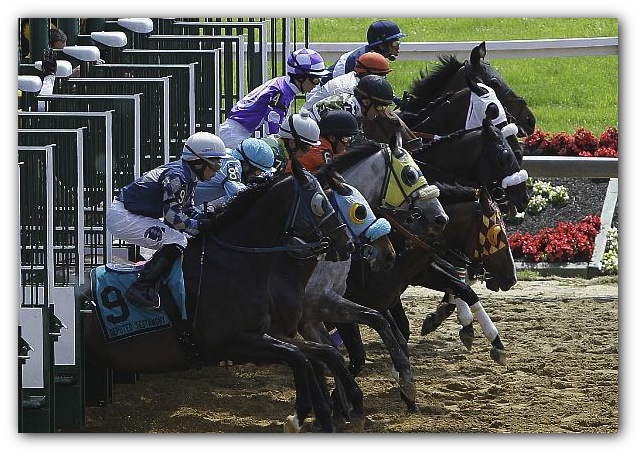
I’m actually quite far along now and feeling good. It seems to go faster when the finish line is in sight. There are 20 chapters in The High Road, and I’ve just started to write Chapter 18. Yes, only two and a half chapters to go and I’m done. Well, not so fast. Actually, when I finish Chapter 20, I’ll then go back to the beginning and take another pass through it all to edit and polish. But I’ll make my Halloween deadline. Doug has already reviewed the first 60,000 words or so and has made some suggestions that I’ll incorporate. Mercifully, there are only minor edits to make and he’s quite pleased with what he’s seen so far. So I’m breathing again.
Usually, if we’re not too busy on weekends, I can write a first draft of an entire 5,000 word chapter from Friday night to Sunday evening. And it almost always happens on weekends when I can carve out several hours at a time to write. I don’t seem to be able to get much writing done during the week after a long day at the office. So thanks to my very indulgent and understanding family, I able to sequester myself in our third floor library for long stretches on Saturdays and Sundays. I’ll report in again when Chapter 20 is in the books (as it were).
How I write: Humour
Friday, March 20th, 2009
I have no idea where I’m going with this post so I thought I’d just start and see where it takes me. I have always loved reading and collecting funny novels. I think good novels that are also funny are hard to find. I also feel strongly that when wielded skillfully, humour can a very powerful and trenchant instrument.
I don’t know about you, but I’ve read hundreds of novels that claim on their cover blurbs to be “sidesplitting,” “hilarious,” and my favourite, “laugh out loud.” Many of them never even come close. But if I do find an author that has me thinking on one page, chortling on another, and shooting milk through my nose on yet another, I’m in my element (although the milk part can be a little uncomfortable). I think that’s why I wanted to attempt a humourous novel.
Humour is a very personal thing. Some readers love slapstick and sophomoric humour, while others hate such lowbrow laughs. Some love funny wordplay or comedic set pieces. Still others enjoy the simplicity, even purity of unadulterated sarcasm. I’m a fan of it all, and like to think that whatever your preferred laugh generator, there’s something for everyone in TBLP (well, almost everyone).
Hindsight is a wonderful thing. Looking back on TBLP from a distance, I think I was trying too hard in the first half of the book to get the laughs. I’m straining for the funny line, building certain scenes around something that was intended to be funny but not necessarily drive the story forward. I think in the early going I just didn’t yet have the confidence that the characters and the story could stand on their own, that I didn’t need to find a punchline in every paragraph. In the second half, I think the humour is less the obnoxious and loud tag along and more the quiet but still welcome companion.
In general, I’m not a fan of humour that embarrasses or humiliates, unless the victim really has it coming. I’ve always enjoyed self-deprecating humour. I think it humanizes a character and makes them more authentic. I also appreciate humour that is fully integrated into the fabric of the story rather than being showy, gratuitous, and disconnected from what’s really happening. Ideally, I want the humour to feel natural and balanced so that it contributes texture, context, and depth to the story, without distracting the reader.
I’m just making all of this stuff up on the fly but it seems to make sense to me as I read it back.
Oh, one more thing. When you’re trying to write comedy or satire, it helps to have a sense of humour.
Writing Update: Chapter 1 is done…
Tuesday, February 17th, 2009
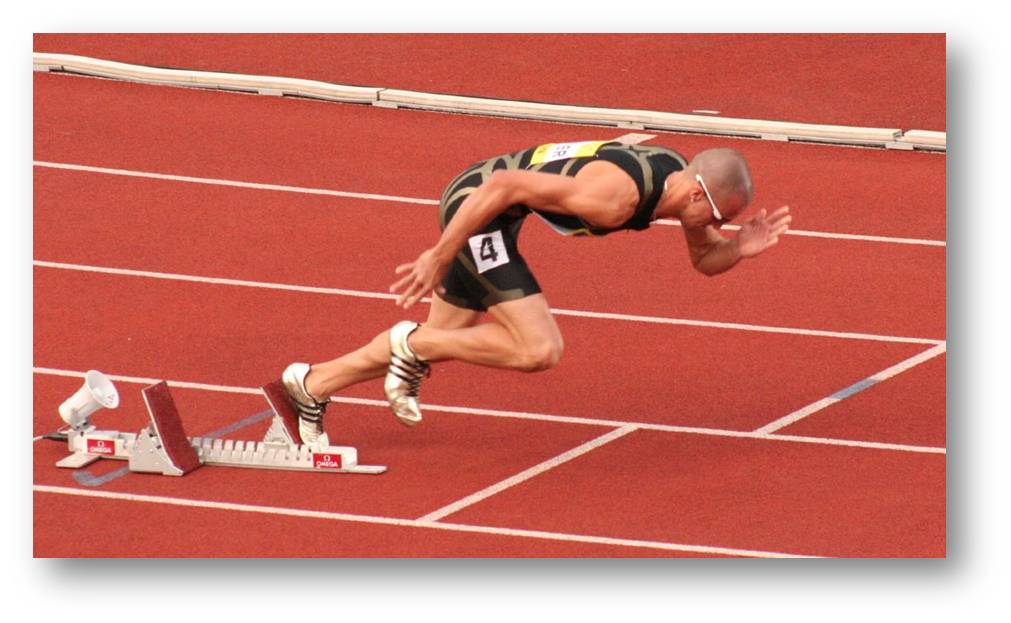
Well, I’m out of the starting blocks. I promise not to bore you all with chapter by chapter progress reports on TBLP’s sequel, but a threshold of sorts was crossed this weekend. After spending several weeks outlining The High Road (working title only), it seemed to take me a while to get started on the actual writing. The log jam was broken this past weekend and eureka, I finished the first pass at Chapter 1. It will still go through considerable polishing before and after I tackle Chapter 2, but at long last, I’m well and truly underway with my second novel. If all goes according to plan, there will be 20 chapters of approximately 5,000 words each. If feels good to have the first 5,000 words behind me.
How I write: Outlining
Sunday, January 11th, 2009
I’ve just this past weekend finished outlining the sequel to TBLP. Hallelujah! It’s a relief to have it done. So I thought it would be a good time to write the first of a few posts under the heading “How I write.” I focus on outlining in this first installment.
I listen to a lot of author/book/writing podcasts, so I’m beginning to learn how other writers go about the task of writing a novel. There is considerable variety in approach. I’m struck by the number of authors who have no real plan before they put finger to keyboard, or in the rare circumstance these days, pen to paper. I often hear authors say something like “I have no idea what’s going to happen. I just create characters and let them take me on their journey.” To me, this writing method is almost unfathomable, although it is certainly not uncommon. I simply could not write that way. It also seems to me that writing without a plan often leads to heavy rewriting and umpteen drafts. I don’t think I could bear to write several chapters and then discard them at the end or worse, write new ones. I just don’t have enough time.
I fall into that other category: the outliners. It may be the engineer in me or a desire, given my hectic family/job life, to maximize efficiency. I feel the need to know exactly where the story is going, what my characters are doing, who will do and say what to whom next, etc. So I develop a detailed outline of the novel, chapter by chapter. The outline for TBLP was 21 pages of bullet points, about one page per chapter. For the sequel, the outline is more extensive. It’s 64 pages in length, or about 3 pages of bullet points for each of the 20 chapters.
So what exactly is covered in the bullet points for each chapter? Well, each of the two to four or so scenes in each chapter is briefly described. Often I’ll create these scenes in my head complete with some idea of the dialogue. So, I’ll often write some rudimentary dialogue to capture the essence of the scene. It’s likely that very little of the actual dialogue quickly scrawled down in the outline will appear in the novel but sometimes that happens. It’s really to help remind me when I come to write that chapter what tone to try to strike. The amusing elements in the chapter are also outlined, whether it’s a funny bit of dialogue or a zany situation of some kind.
When I start the actual writing of the sequel (any day now), I’ll be working on my trusty Fujitsu Lifebook notebook computer. I’ll work in Microsoft Word and split the screen vertically with the chapter outline document opened on the right hand side of the screen, and the in-progress novel manuscript on the left. In this way I can keep one eye on the chapter outline while I write, edit, and polish the manuscript.
Because of the time devoted to developing the detailed outline, the actual writing seems to go rather smoothly and reasonably quickly (at least it seemed to with TBLP).
One valid question to ask about this rather methodical, even mechanical approach: Does it rob the writing and the story of its spontaneity? What do I know? But I really don’t think so. Even with TBLP being fully outlined in advance, there were several modifications made to the plotline as I wrote the manuscript. The outline is important to me, even critical, but I’ll still make changes that emerge from the fog in my head as I’m writing.
By the way, while the outline for the entire novel is in a single Microsoft Word file, I write and save each chapter in the manuscript as a separate file. I also back up everything onto a USB flash drive after every writing session. I’m paranoid about a catastrophic hard-drive failure and losing everything. I cannot think of anything quite as heart-breaking as losing your manuscript and having to start over. The wife of Ernest Hemingway once left the only copy of one of her husband’s completed manuscripts on a train. They never recovered it. I think of that sad tale whenever I’m feeling too bored and tired to back up my files.
Anyway, I’m feeling good that the outline for the sequel is now completed. I’m using the working title, The High Road, but that may very well change. Now it’s on to writing Chapter One…